
Wind is one of the most significant factors when trying to hit targets down range, and also one of the hardest to measure accurately. Most of the other environmental variables such as, elevation, air pressure, humidity, and temperature, are measurable and stay reasonably constant between shots. Not only can wind change in speed rapidly, it can also change direction.
One thing to note, wind is hardly ever constant between the shooter and the target. But for the purpose of this article we will assume it is and move on to down range wind variations another day. start with the basics.
Wind speed by itself is something that can be measure at the shooter fairly easily with any wind meter. They are an invaluable tool for long range shooting and if you don’t have one, get one! I started with the Caldwell Wind Wizard and it is a great entry level option. The downside is most will measure wind speed, but that’s only half the problem. The wind angle to the target is critical because that will effect how much of the wind deflects the bullet horizontally.
The way wind effects bullet flight is defined as a vector, meaning the wind has a speed and a direction. That direction can then be broken down into components in any new direction we choose. Lets make the bullet travel direction Y, and the horizontal X. Now we can break down the wind into effects along each of these axis. We can now ignore the component in the Y direction since wind traveling in the same direction on the bullet isn’t going to cause horizontal deflection at the target. The X component is the value that is going to effect how much wind deflection we have at the target that we have to account for.
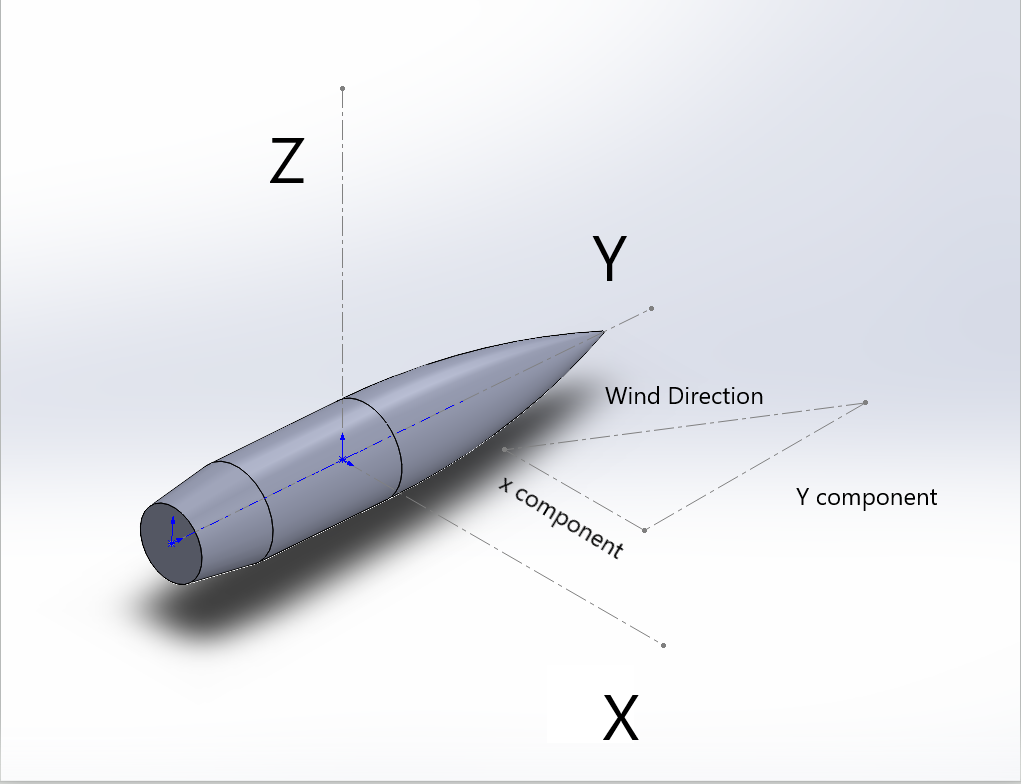
Hopefully talking about vectors didn’t get to intimidating, Its basically just triangle math at this point. If we know the wind speed and the angle, we can solve for the horizontal component fairly simply.
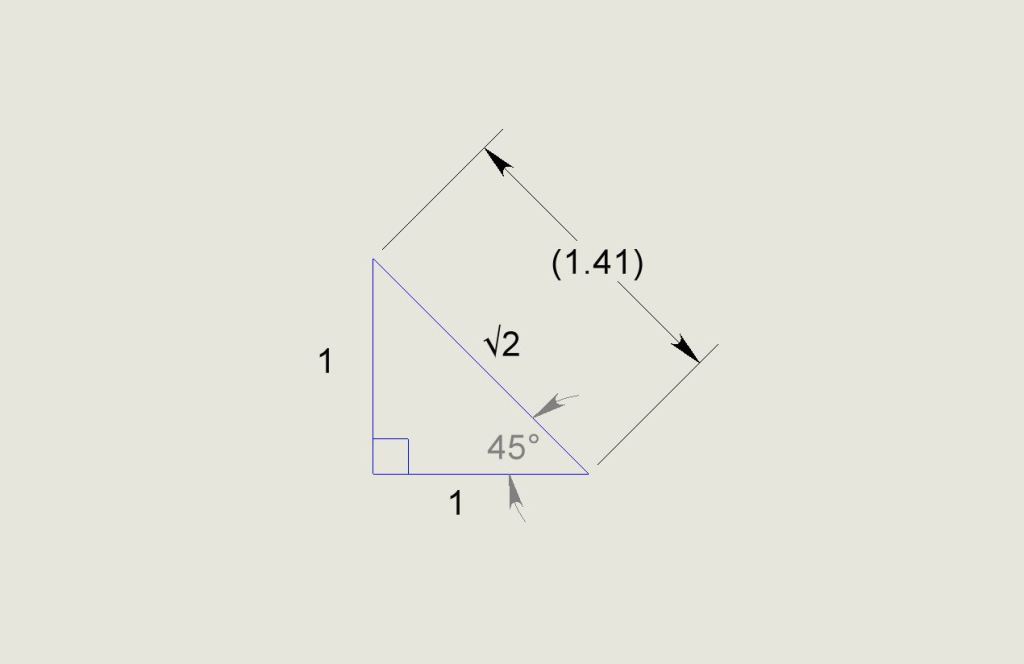
The image above shows the relation for a wind at 45 degrees. at this angle, the wind speed is always 1.41 greater than the horizontal component. 1/1.41=.71. So looking at this shows that the horizontal wind speed is always .71 or 71% of the total wind speed when coming at a 45 degree angle. so a 10 MPH wind coming in at 45 degrees has the same effect as a straight crosswind of 7.1 MPH. This is especially handy when you have a ballistic calculator that doesn’t let you enter in the wind angle for its calculations, or are gauging wind speed from flags or the environment and need to correct for the angle. To save time, below is the correction values at various wind directions. Also notice that the coordinate system is broken up into a clock. So rather that saying “a 45 degree from the right” wind, it would be considered wind from 1:30. 1 o’clock is 30 degrees, and 2 o’clock is 60 degrees.
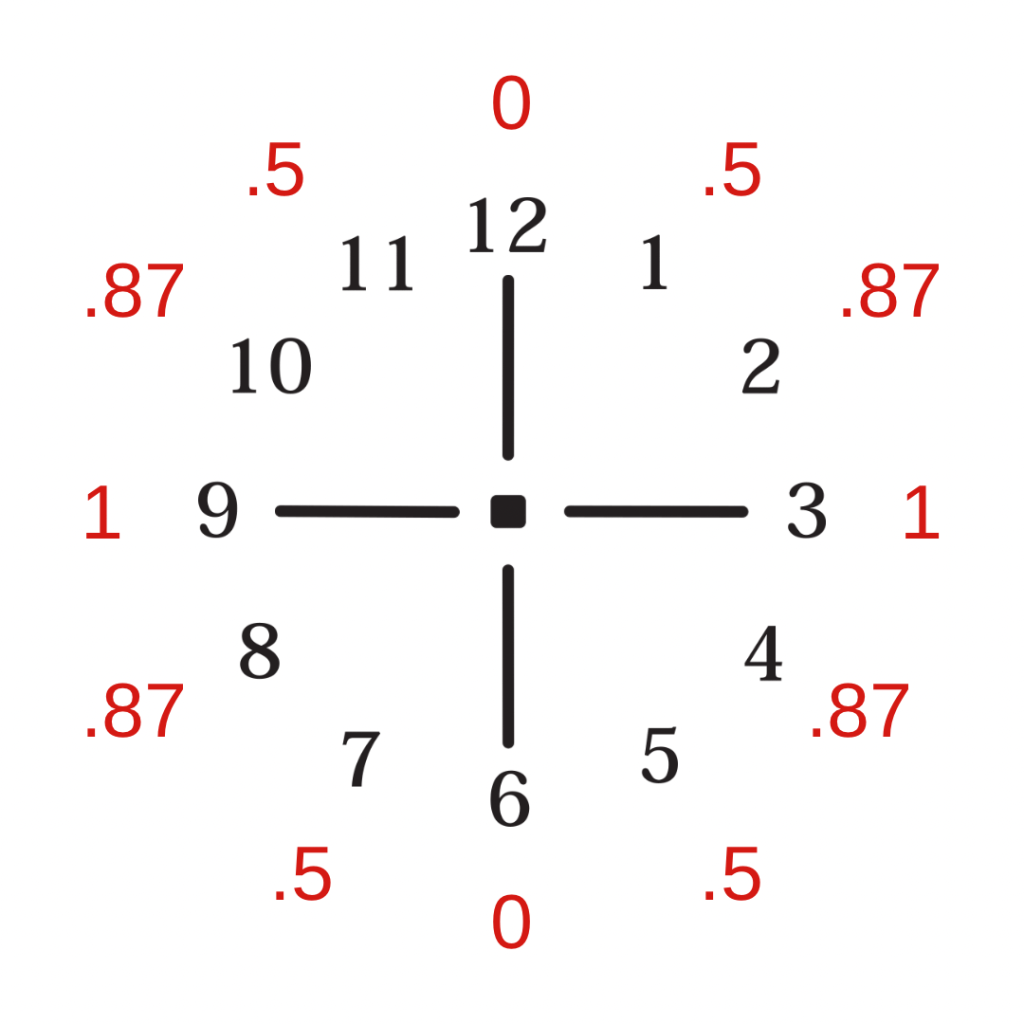
Its also interesting to note, that whether coming from in front or behind, doesn’t matter. The horizonal component will still be the same regardless of a head wind or tail wind. And then obviously wind from the left side pushes to the right, and wind from the right pushes to the left. Head and Tail winds have no deflection effect, and winds from 3 and 9 are just the full value of the wind.
Some wind meters do have built in windage correction, such as the Kestrel 5700 elite. This has a built in ballistic calculator that measure all environmental factors, wind speed and direction relative to the target. But if you only have one that measure speed, or are gauging wind without a meter, the correction factors are important to know.
One easy way is to build up a range card like the one below. This is for my 6mm Creedmoor with a 10 MPH wind. I have listed the effect at each distance, along with pre populated values for angle so i don’t have to do math in the field. This is one way to do it, but a card would be needed for various wind speeds.
| Range Yards | Velocity | Energy | Trajectory | Come Up (MOA) | Wind Drift (MOA) FULL 3 O’clock | Wind Drift 60° 2 O’clock | Wind Drift 40° 1:30 O’clock | Wind Drift 30° 1 O’clock |
| 0 | 3050 | 2169 | -1.5 | 0 | 0 | 0 | 0 | 0 |
| 100 | 2924 | 1993 | 0 | 0 | 0.4 | 0.35 | 0.28 | 0.20 |
| 200 | 2801 | 1829 | -2.6 | 1.2 | 0.7 | 0.61 | 0.50 | 0.35 |
| 300 | 2682 | 1677 | -9.6 | 3 | 1.1 | 0.96 | 0.78 | 0.55 |
| 400 | 2566 | 1535 | -21.4 | 5.1 | 1.5 | 1.31 | 1.07 | 0.75 |
| 500 | 2453 | 1402 | -38.5 | 7.4 | 1.9 | 1.65 | 1.35 | 0.95 |
| 600 | 2342 | 1279 | -61.5 | 9.8 | 2.4 | 2.09 | 1.70 | 1.20 |
| 700 | 2235 | 1164 | -90.7 | 12.4 | 2.8 | 2.44 | 1.99 | 1.40 |
| 800 | 2130 | 1058 | -126.9 | 15.1 | 3.3 | 2.87 | 2.34 | 1.65 |
| 900 | 2028 | 959 | -170.8 | 18.1 | 3.8 | 3.31 | 2.70 | 1.90 |
| 1000 | 1929 | 868 | -223.2 | 21.3 | 4.3 | 3.74 | 3.05 | 2.15 |
But whatever the method, ballistic calculators aren’t perfect and can only get so close. The most important thing is to go shoot! Shoot in different weather conditions, note the effects and really learn your gear and how it behaves. Calculations are a great starting point, but verification, practice, and experience are key.




 LONG RANGE SCIENCE
Leave a comment